Teaching Philosophy
My teaching is rooted in the conviction that understanding environmental change requires engaging with the diverse knowledge systems, cultural values, and lived experiences of the communities most affected by it. I train students to think across disciplinary boundaries and approach environmental problems as fundamentally social-ecological in nature: shaped by history, culture, power, and place as much as by biophysical processes.
I have taught courses that cover topics in cultural and political ecology, Indigenous environmental justice, and the human dimensions of environmental change. My courses examine how ecological knowledge, cultural practices, and governance institutions shape the way societies relate to and steward the landscapes they care about. Students engage with foundational and contemporary scholarship from environmental anthropology, political ecology, Indigenous environmental studies, and the environmental sciences while developing practical skills in ethnographic, spatial, mixed-method, and community-engaged research practices.
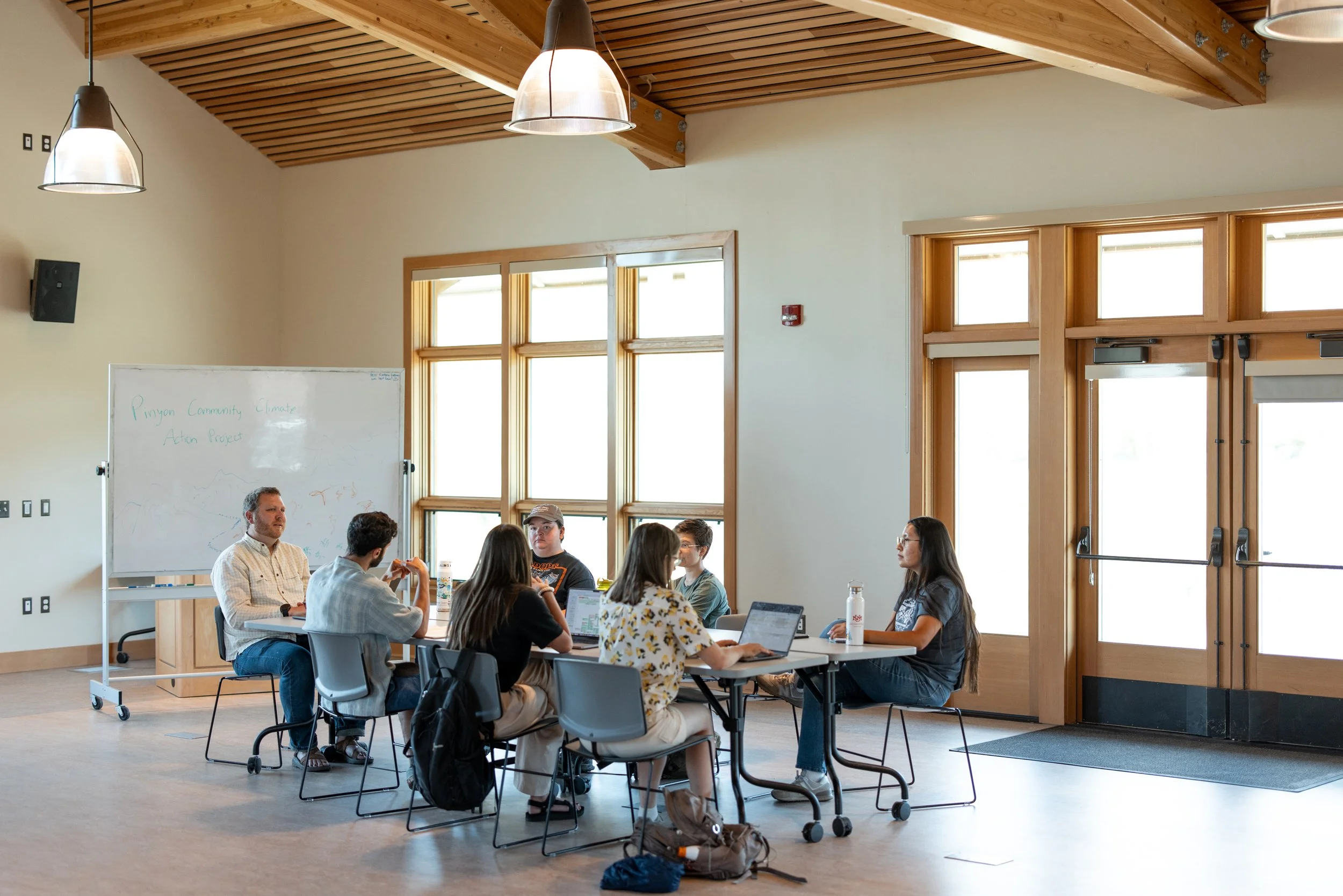
Eastern Sierra Land & Community Survey classroom session at Valentine Eastern Sierra Reserves in Mammoth Lakes. Photo by Andrew Broadhead.
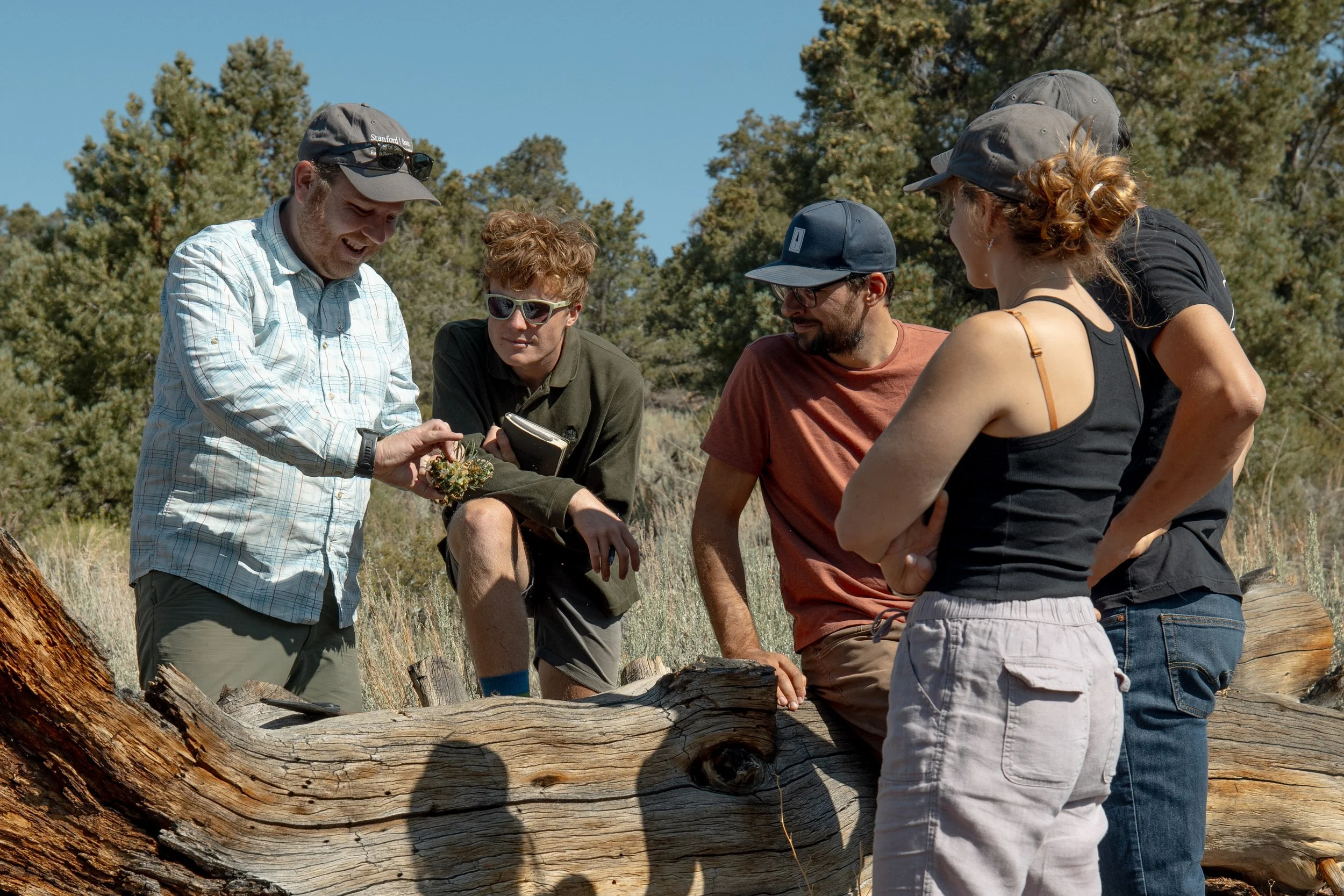
Field training session on the Inyo National Forest. Photo by Andrew Broadhead.
Mentorship and Field-Based Learning
I am committed to creating opportunities for undergraduate and graduate students to participate in community-engaged research. My research projects provide hands-on training in fieldwork methods, including ethnography, interviewing, focus group discussions, survey design, community science, participatory mapping, and spatial analysis. We do this while building meaningful relationships with frontline communities facing environmental change. I mentor students so they develop research skills, explore interdisciplinary scholarship, and prepare for careers in climate science, environmental policy, and community-based conservation.
Field-based learning is critical to my teaching and mentorship. I provide opportunities for students to conduct research at field sites and with community partners, fostering direct engagement with the landscapes and communities at the center of pressing environmental challenges. These experiences cultivatetechnical competencies but also foster the relational skills and ethical commitments that effective community-engaged scholarship requires.
Classroom Course Instruction
Beginning in the 2027-2028 academic year, I will teach undergraduate and graduate courses at UC Berkeley in environmental social science, climate adaptation, and community-engaged research methods. Course details will be posted as they are confirmed. Previously, I served as a Teaching Fellow at the Yale School of the Environment and Yale College, leading discussion sections, delivering guest lectures, advising student research projects, and facilitating seminar discussions across the following courses:
Yale School of the Environment (Graduate)
Nature, Rationality, and Moral Politics, with Justin Farrell — Culture, morality, religion, politics, and social movements in relation to natural landscapes and rural communities in the United States.
The American West: A Case Study in Social Structure, Culture, and Politics, with Justin Farrell — Environmental values, energy and water conflicts, Indigenous experiences, and institutional structures in the North American West.
Social Science of Conservation and Development, with Carol Carpenter — Social dimensions of conservation and development practice, including the role of politics, power, and knowledge systems in shaping outcomes.
The Black Box of Policy Implementation: Households, Communities, Gender, with Carol Carpenter — How assumptions about households, communities, and gender shape the implementation of development and conservation policy.
Yale College (Undergraduate)
American Environmental History, with Paul Sabin — The reciprocal relationship between human societies and the North American environment from pre-colonial times to the present.
Field Course Instruction
Eastern Sierra Land & Community Survey Field School (Stanford University) — A 10-week annual field school I created and directed, training undergraduate and graduate students from Stanford and the University of California system in social science data collection for environmental research. Students learned interviewing, focus group facilitation, household survey administration, and community science field methods while conducting original research with Tribal Nations and rural communities in California's Eastern Sierra Nevada. This field school is based at the University of California’s Valentine Eastern Sierra Reserves and White Mountain Research Center.
Field Course in Culture, Politics, and Social Change (Yale School of the Environment) — Co-designed and co-led a 10-day immersive field course for master's students in western Wyoming. The course examined environmental politics and social change through student engagement with US Fish & Wildlife Service biologists, Eastern Shoshone Tribal leaders on the Wind River Reservation, the Latino Resource Center in Jackson, and Teton County land use planners.